By most traditional measures, the global banking sector looks surprisingly healthy today. Return on equity in Europe and Japan has been rising steadily since 2019. For the first time in a long while, European banks have overtaken their American competitors in cost efficiency.
After a decade marked by crises and regulatory overhauls, the industry seems to have finally exhaled. But behind these figures, according to several fintech experts, lies a process that could undermine the very logic on which these metrics were built.
Fintech entrepreneur
Artem Lyashanov, whose career took him from the technical support desk at PIN Bank to senior leadership positions in the international payments industry, describes what is happening as a moment when the very architecture of financial services is changing.
An asset you don't have to wait for
This is about tokenization, a process in which rights to assets are recorded not in paper registers or closed bank databases, but as digital tokens on a distributed ledger. In practice, this means that confirming ownership, which used to take days, can now happen almost instantly. The asset and its settlement essentially merge into a single digital code.
Artem Lyashanov describes this as a shift in the very logistics of modern finance. Tokenization, in his words, makes it possible to transfer value to virtually any point in the world at any moment, for a small fraction of the cost of traditional transactions.
Companies are already using tokenized assets as collateral to raise capital, bypassing lengthy paper procedures and avoiding the need to sell strategic assets prematurely. This speeds up financial decisions, but, Artem Lyashanov warns, it also requires more deliberate risk management, because speed also reduces the time available to correct mistakes.
In practice, this is already changing several things today:
- The entry threshold for highly liquid assets is getting lower. Some of them can be bought in fractions rather than in full;
- Delays in supply chains and financing are shrinking, because settlement happens at the same time as the transfer of rights;
- The bank's role is shifting from simply holding assets to automating compliance checks based on smart contracts.
Legacy
The problem of traditional banks, in the expert's assessment, lies in architecture, in the literal sense of the word. Many large institutions continue to invest significant sums in modernization, yet still run on systems designed for an era when tokenization was more a theoretical idea than a practical tool.
According to industry surveys of financial-sector executives, a significant share of them admit that without powerful computing resources and hybrid cloud infrastructure, survival in a tokenized world will be extremely difficult. This creates a kind of generational gap within the industry itself.
Regulation played into technology's hands
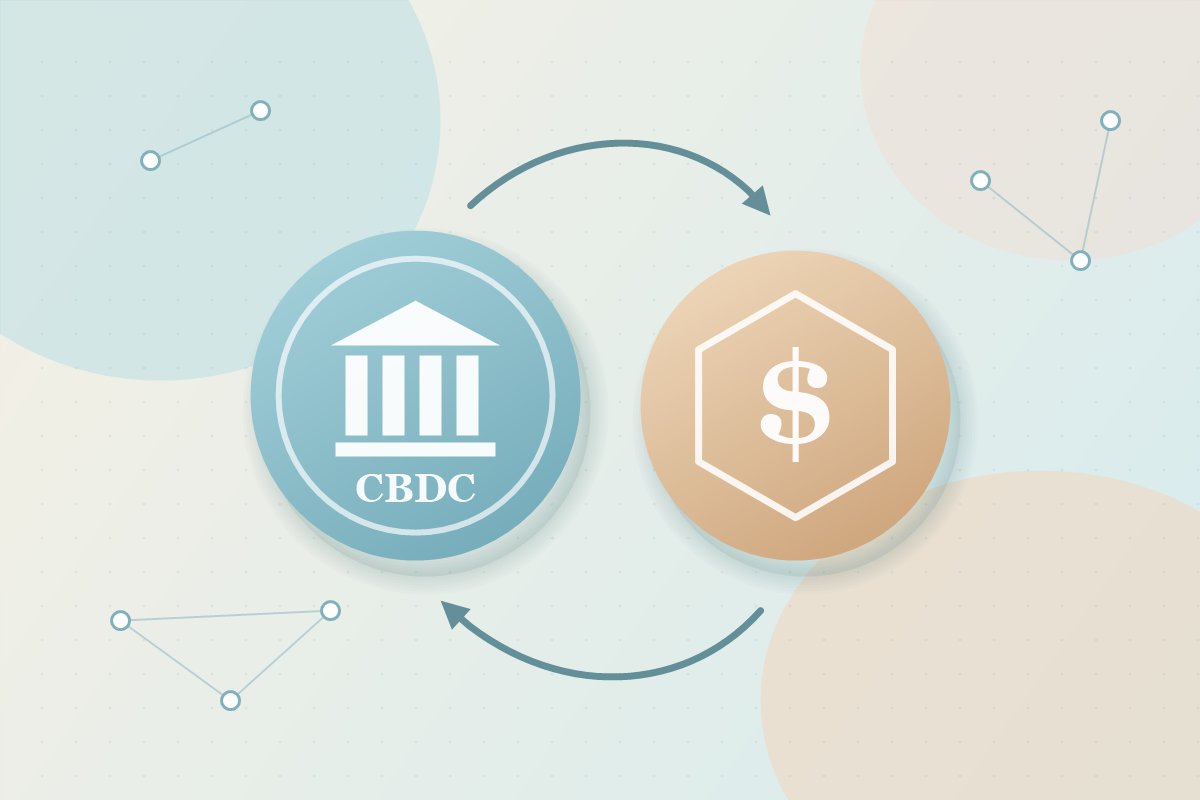
For a long time, the skeptics' main argument against tokenization and related technologies was uncertainty: the volatility of the crypto market and the lack of clear legal frameworks. This argument, as Artem Lyashanov observes, has largely lost its force as regulators around the world have established rules for stablecoins and developed central bank digital currencies (CBDC).
The effect has been twofold. On the one hand, big capital gained grounds to see blockchain infrastructure not as a speculative instrument, but as a system capable of operating independently of crypto market swings. On the other, banks that cited "regulatory immaturity" as a reason to postpone investment have one less argument.
The right to enter
If technological infrastructure determines who is able to take part in the new economy, then traditional banks retain at least one structural advantage: trust.
But here Artem Lyashanov makes an important caveat. Reputation gives banks the right to enter the game, but it does not guarantee victory in it. Being chosen as a partner is not the same as being technologically able to perform that role better than competitors. A bank may have a license, a track record and the trust of its clients, and still lack the infrastructure capable of technologically justifying that trust at the moment a client asks to tokenize a real portfolio of assets.
By 2030, according to the forecasts cited by Artem Lyashanov, tokenization could significantly change the architecture of the market and the approaches to pricing financial products. To the point that some operational decisions in tokenized ecosystems will be made not by people, but by automated algorithmic systems.
This article is for informational purposes only and reflects an expert assessment of industry trends.